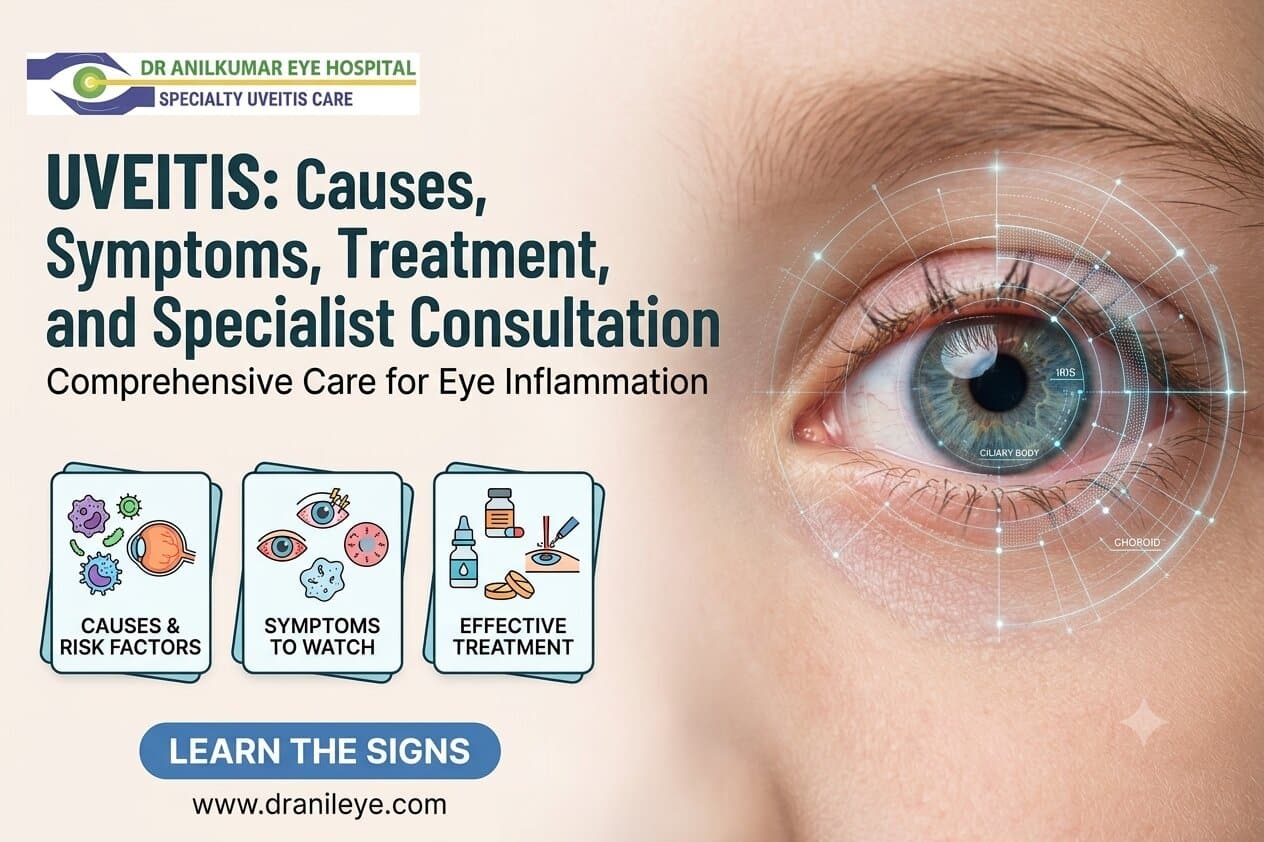
Have you ever had eye pain, redness, and changes in vision? While these symptoms can be caused by a common eye infection, they may also be a warning sign of uveitis, an often painful type of eye inflammation.Uveitis may appear suddenly or build slowly over time. It usually affects one or both eyes. Since untreated inflammation inside the eye can damage vision, it is important to recognize these symptoms and respond promptly.In this article, we’ll review the details of this condition – including the causes, symptoms, types, and treatment options.

What Is Uveitis?

Uveitis is an inflammation of the uvea which is the middle layer of tissue in the eyeball. The uvea contains the iris, ciliary body and choroid. Depending on the inflamed part of the eye, this condition may present with different symptoms and require various treatment approaches.While this problem may occur at any age, the causes and symptoms may vary. This is an inflammation that should not be taken lightly – a persistent redness or pain in the eye is a reason to see an eye doctor.

What Causes Uveitis?

This condition has many potential causes, and in some cases, the cause cannot be determined.

These may include:

  • Autoimmune or inflammatory disorders

  • Infections – bacterial, viral or parasitic

  • Eye trauma or injury

  • Autoimmune or inflammatory diseases

  • Medications

  • Immune system problems

  • In some cases, unknown cause

Because this condition may be related to other chronic health issues, your optometrist may ask about your general health, past illnesses and medications during your eye exam.

Types of Uveitis

Uveitis is generally categorized based on the specific part of the eye that is inflamed.

Anterior Uveitis

Anterior uveitis affects the very front part of the eye which includes the cornea and iris. This is the most common type of uveitis. Some of the most common symptoms which may appear suddenly and include:

– Redness in the eye

– Eye pain

– Light sensitivity

– Blurry vision

– Eye watering

Intermediate Uveitis

Intermediate uveitis affects the middle part of the eye. This may lead to floaters and blurry vision as the most common symptoms.

Posterior Uveitis

Posterior uveitis is a rare type which affects the retina or choroid – the structures in the very back of the eye.

Symptoms of posterior uveitis may include:

– Reduced or blurry vision

– Floaters

– Impaired ability to see clearly

– Decreased visual field size

Panuveitis

Panuveitis is a type of uveitis which affects more than one area of the uvea.

How Is Uveitis Diagnosed?

A comprehensive eye exam is needed to diagnose this condition. Your ophthalmologist may perform a series of specialized tests to examine the front and rear parts of your eye, check your visual acuity, eye pressure, and look for any signs of inflammation. Depending on the case, additional tests may be done to determine the underlying cause.

Uveitis Treatment

The primary goal of this treatment is to reduce inflammation, alleviate symptoms, prevent complications, and restore eye health. The treatment approach depends on the type and severity of this condition. It is important to understand that most cases require individualized treatment plans developed by an eye care specialist.

Eye Drops

Eye drops are a primary treatment for some types of anterior uveitis. Since this condition is an inflammatory one, drops which reduce inflammation and dilate the pupil may be prescribed.

In addition, drops which reduce eye pain and light sensitivity may be used. They may help reduce the stress on inflamed tissues and support the healing process.

Medications

Depending on the underlying cause, medications which reduce inflammation or treat an existing infection may be needed.

Treatment of Underlying Conditions

If this condition is associated with another disease, a collaborative treatment plan may be developed with your primary care physician or a specialist.

Follow-Up Care

Since this condition may become chronic, regular follow-up eye exams are essential even if you feel that your symptoms have cleared.

Never use any prescribed or over-the-counter medication or eye drops unless it was specifically recommended by an eye care professional. Certain eye conditions such as infections or inflammations may actually be aggravated by these types of drops.

Can Uveitis Affect Vision?

If this inflammation is left untreated or occurs frequently, it can permanently damage your vision. In some cases, it can be a precursor to other vision-threatening diseases.

To reduce the risks of vision loss due to this condition, it is important to report any changes in vision to your eye care provider for a swift diagnosis and appropriate treatment.

Can Uveitis Come Back?

Depending on the type and cause, it may either be a one-time episode or a recurring one. If you have already had this condition, it is important to have regular eye exams to monitor the health of your eyes, even if you do not have any symptoms.

Conclusion

Uveitis is an inflammation of the eye which can cause redness, pain, light sensitivity, eye floaters, and reduced vision. Its causes vary depending on the type and each case must be evaluated individually. The most important thing is not to ignore the symptoms and consult an eye care professional for an accurate diagnosis and appropriate treatment.

If you have any of the symptoms described above or have concerns about your eye health, schedule an appointment with your eye doctor.

Frequently Asked Questions About Uveitis

    1.Is uveitis a serious eye condition?

    This condition can seriously affect the vision if not treated in time. However, an early diagnosis and treatment can reduce the risks of developing this complication.

    2.What are the common symptoms of uveitis?

    The most common symptoms which may vary depending on the type of uveitis include eye pain, redness and irritation. Patients may also experience light sensitivity, eye watering, floaters, and blurry vision.

    3.Can uveitis be cured?

    Depending on the underlying cause, this condition can often be successfully treated. However, some cases may require chronic treatment to reduce the risks of recurrence.

    4.Can uveitis cause blurred vision?

    Yes, this condition can indeed cause this symptom. In case of any new visual disturbances, it is important to consult an eye care specialist for an examination and determination of the underlying cause.

    5.Should I use eye drops for uveitis?

    Only those eye drops that were recommended by an eye specialist can be used to treat this condition. In particular, steroid eye drops may be prescribed to reduce the inflammation in the eye. However, such eye drops can also be harmful if not used in the appropriate cases.