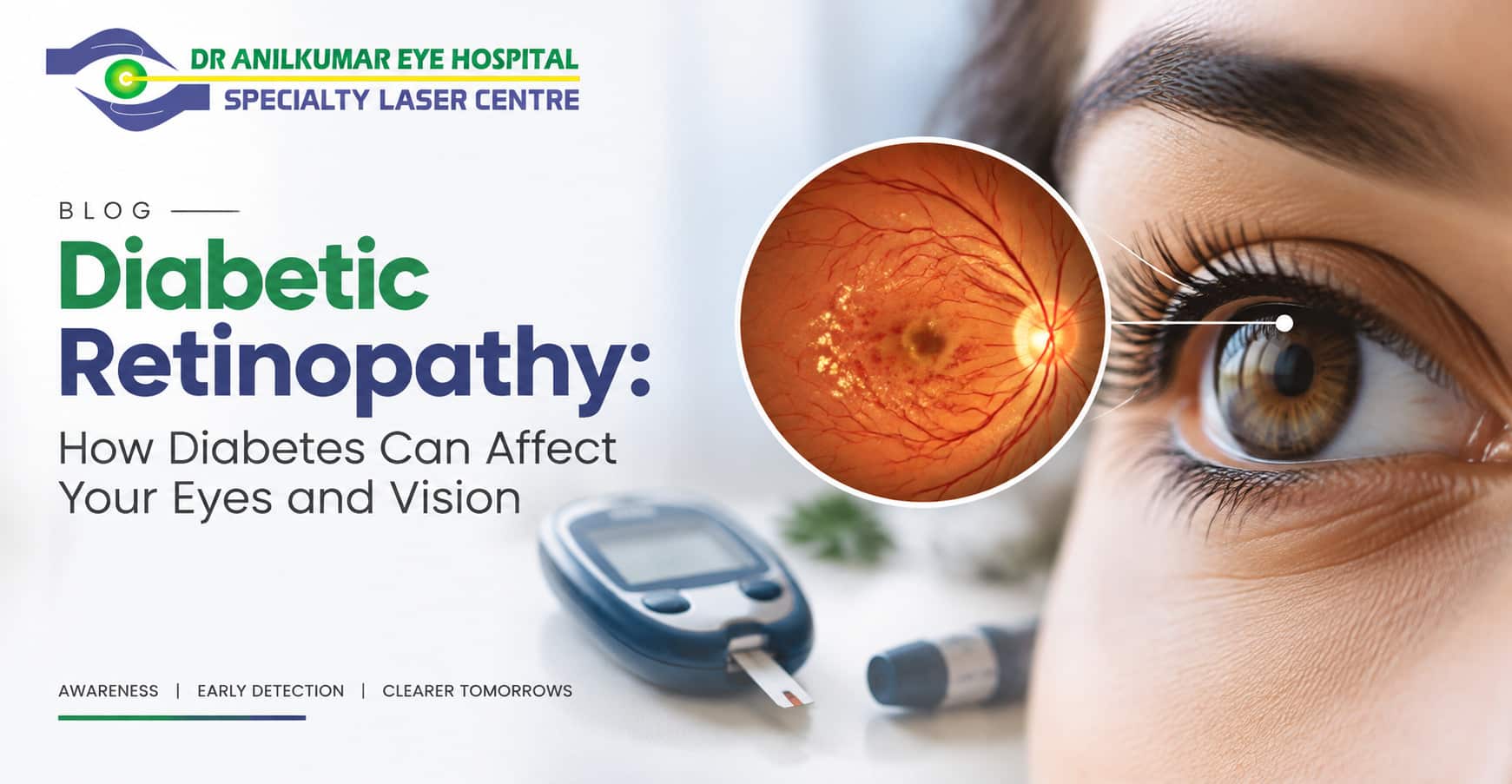
Diabetes can affect much more than blood sugar levels. Over time, consistently high blood sugar can damage the tiny blood vessels that supply different parts of the body, including the eyes.
One of the most common eye conditions associated with diabetes is diabetic retinopathy. It affects the retina, the light-sensitive tissue at the back of the eye that plays an essential role in vision.
The concerning part is that diabetic retinopathy may cause little or no noticeable symptoms during its early stages. A person may have seemingly normal vision even while changes are developing inside the eye. This makes regular diabetic eye examinations especially important.
Understanding Diabetic Retinopathy
Diabetic retinopathy is a diabetes-related eye condition that occurs when prolonged high blood sugar damages the blood vessels in the retina.
These tiny blood vessels can become weak, blocked, or leaky. In some cases, they may bleed or cause fluid to build up in the retina. As the condition progresses, abnormal new blood vessels may also develop.
If diabetic retinopathy is not detected and managed appropriately, it can lead to serious complications and vision loss. However, early detection and timely treatment can significantly reduce the risk of severe vision problems.
How Does Diabetes Affect the Eyes?
When blood sugar remains high for a prolonged period, it can gradually damage the small blood vessels in the retina.
Initially, these vessels may become weak and start leaking fluid or blood. As diabetic retinopathy progresses, the blood supply to parts of the retina may become reduced. In response, the eye may develop abnormal blood vessels, which are fragile and can bleed easily.
These changes can affect vision and may eventually lead to serious retinal complications.
For this reason, people with diabetes should make eye examinations a regular part of their overall diabetes care.
What Are the Symptoms of Diabetic Retinopathy?
One of the challenges of diabetic retinopathy is that it may not cause noticeable symptoms in its early stages.
As the condition progresses, however, a person may experience:
-
-
Blurred or fluctuating vision
-
Dark spots or floaters
-
Difficulty seeing at night
-
Reduced vision
-
Areas of vision loss
-
Changes in colour vision
-
Difficulty seeing fine details
-
If you experience any sudden or unexplained changes in your vision, it is important to consult an eye specialist promptly.
Regular diabetic retinopathy screening can also detect retinal changes before noticeable symptoms develop.
What Are the Different Stages of Diabetic Retinopathy?
Diabetic retinopathy is generally classified into two main stages: non-proliferative diabetic retinopathy and proliferative diabetic retinopathy.
Non-Proliferative Diabetic Retinopathy
Non-proliferative diabetic retinopathy is generally the earlier stage of the condition.
During this stage, the small blood vessels in the retina can become weak and develop small areas of leakage. Some vessels may also become blocked.
Vision may remain relatively normal, particularly during the early stages. This is why regular eye examinations are important even when there are no noticeable vision problems.
Proliferative Diabetic Retinopathy
Proliferative diabetic retinopathy is a more advanced form of the disease.
When parts of the retina do not receive enough oxygen, the eye may respond by developing abnormal new blood vessels. These vessels are fragile and can bleed into the eye.
In more advanced cases, scar tissue may develop and cause traction on the retina, potentially leading to serious vision problems.
What Is Diabetic Macular Edema?
Diabetic macular edema (DME) occurs when fluid accumulates in the macula, the central part of the retina responsible for sharp, detailed vision.
Diabetic macular edema can affect central vision and may cause:
-
-
Blurred central vision
-
Difficulty reading
-
Difficulty recognizing faces
-
Difficulty seeing fine details
-
Distorted or fluctuating vision
-
A person with diabetic retinopathy may also develop diabetic macular edema. Regular retinal examinations can help identify these changes and guide appropriate treatment.
Who Is at Greater Risk of Developing Diabetic Retinopathy?
Anyone with diabetes can develop diabetic retinopathy. However, certain factors can increase the risk.
These include:
-
-
Having diabetes for many years
-
Poorly controlled blood sugar
-
High blood pressure
-
High cholesterol
-
Pregnancy in people with diabetes
-
Smoking
-
Kidney disease
-
Cardiovascular disease
-
In general, the longer a person has diabetes, the more important regular diabetic eye screening becomes.
How Is Diabetic Retinopathy Detected?
A diabetic eye examination allows an eye specialist to evaluate the retina and look for signs of blood vessel damage.
Depending on the patient’s condition, the examination may include:
-
-
Visual acuity testing
-
Eye pressure measurement
-
Dilated eye examination
-
Retinal examination
-
Retinal photography
-
Optical coherence tomography (OCT)
-
Other retinal imaging tests when required
-
These tests help the ophthalmologist assess the health of the retina and determine whether diabetic retinopathy or related complications are present.
How Often Should a Person With Diabetes Have an Eye Examination?
The recommended frequency of eye examinations can vary depending on factors such as the type and duration of diabetes, age, pregnancy, previous retinal changes and overall health.
Many people with diabetes require at least an annual comprehensive eye examination, while those with existing retinal changes may need more frequent follow-up.
Your ophthalmologist can recommend the most appropriate examination schedule based on your individual eye health.
Most importantly, do not wait until your vision becomes blurry before having your eyes checked.
How Is Diabetic Retinopathy Treated?
The appropriate diabetic retinopathy treatment depends on the stage and severity of the condition, as well as whether complications such as diabetic macular edema are present.
Treatment may include the following:
Managing Blood Sugar, Blood Pressure and Cholesterol
Keeping blood sugar, blood pressure and cholesterol within the recommended range is an important part of managing diabetes and reducing the risk of diabetic eye complications.
Following your doctor’s advice regarding medication, diet and lifestyle can support both your general health and eye health.
Anti-VEGF Injections
Anti-VEGF medicines may be recommended for certain complications of diabetic retinopathy, particularly diabetic macular edema.
These medicines can help reduce abnormal blood vessel activity and retinal swelling in appropriate cases. They may also be used in selected cases of proliferative diabetic retinopathy.
Laser Treatment
Laser treatment may be recommended for certain types and stages of diabetic retinopathy.
The purpose and extent of laser treatment depend on the location and severity of the retinal changes.
Vitrectomy Surgery
In advanced cases, such as significant bleeding inside the eye or traction affecting the retina, vitrectomy surgery may be considered.
The eye surgeon will determine whether surgery is appropriate based on the condition of the retina and the individual patient’s needs.
Can Diabetic Retinopathy Be Prevented?
Diabetic retinopathy cannot always be completely prevented, but several steps can help reduce the risk of developing the condition or slow its progression.
Important measures include:
-
-
Keeping blood sugar under control
-
Managing blood pressure
-
Monitoring cholesterol levels
-
Taking prescribed medications regularly
-
Avoiding smoking
-
Maintaining a healthy lifestyle
-
Attending regular diabetic eye examinations
-
Following the treatment plan recommended by your doctor
-
Regular eye examinations are particularly important because retinal changes can develop before symptoms become noticeable.
Why Is Early Detection of Diabetic Retinopathy Important?
Diabetic retinopathy can develop silently.
A person may have relatively normal vision while retinal damage is already taking place. By the time noticeable vision changes appear, the condition may have progressed.
Regular diabetic eye examinations allow an eye specialist to identify retinal changes at an earlier stage and recommend appropriate monitoring or treatment.
Early detection does not necessarily mean that treatment will always be required immediately. In some cases, careful monitoring and control of diabetes may be appropriate. The treatment plan depends on the individual condition of the retina.
When Should You See a Retina Specialist?
People with diabetes should maintain regular eye care. However, certain symptoms require prompt medical attention.
You should seek an eye examination if you experience:
-
-
Sudden blurred vision
-
A sudden increase in floaters
-
Flashes of light
-
A dark curtain or shadow across your vision
-
Sudden loss or reduction of vision
-
Significant changes in your usual eyesight
-
Sudden vision loss or a curtain-like shadow across the field of vision should be treated as an eye emergency.
Do not wait for these symptoms to resolve on their own.
Conclusion
Diabetic retinopathy is an important eye complication of diabetes, but early detection and appropriate management can help protect vision.
Because diabetic retinopathy may develop without obvious symptoms, regular diabetic eye examinations are important even when your eyesight appears normal.
Managing blood sugar, blood pressure and cholesterol, maintaining a healthy lifestyle and following your doctor’s recommendations can all contribute to better long-term eye health.
If diabetic retinopathy is detected, an eye specialist can assess the condition and recommend appropriate monitoring or treatment based on the severity of the retinal changes.
Don’t wait for vision problems to appear before taking care of your eyes. Regular eye examinations can help protect your vision for the future.
Frequently Asked Questions About Diabetic Retinopathy
1. What is diabetic retinopathy?
Diabetic retinopathy is a diabetes-related eye condition in which prolonged high blood sugar damages the blood vessels of the retina.
2. What are the early signs of diabetic retinopathy?
Early diabetic retinopathy may cause few or no noticeable symptoms. Regular eye examinations are therefore important for people with diabetes.
3. Can diabetic retinopathy cause blindness?
Severe diabetic retinopathy can cause significant vision loss and, in advanced cases, blindness. Early detection and appropriate treatment can help reduce the risk of serious vision complications.
4. Can diabetic retinopathy be cured?
There is no single treatment that permanently reverses all retinal damage caused by diabetes. However, diabetic retinopathy can often be managed with appropriate monitoring, medical treatment, laser treatment or surgery when required.
5. What are the best ways to reduce the risk of diabetic retinopathy?
Managing blood sugar, blood pressure and cholesterol, avoiding smoking, maintaining a healthy lifestyle and attending regular diabetic eye examinations can help reduce the risk of diabetic retinopathy and its complications.
6. Can diabetic retinopathy occur without symptoms?
Yes. Diabetic retinopathy can develop without noticeable symptoms, especially during its early stages. This is why regular retinal screening is important.
7. How often should a person with diabetes see an eye specialist?
The recommended frequency varies from person to person. Many people with diabetes need a comprehensive eye examination at least once a year, while those with existing retinal changes may require more frequent follow-up. Your ophthalmologist can recommend the appropriate schedule for you.